How to Write High-Quality Scientific Papers in the Age of Artificial Intelligence
Cómo escribir artículos científicos de calidad en la era de la inteligencia artificial
Jorge Buele Buele
| Centro de Investigación en Mecatrónica y Sistemas Interactivos (MIST), Facultad de Ingenierías, Universidad Tecnológica Indoamérica, Ambato, Ecuador
| ORCID
| jorgebuele@uti.edu.ec
Writing a scientific article requires connecting the decisions that justify a study with the conventions used to communicate it. Although numerous writing guides exist, their recommendations need to be integrated with the process that leads from the current state of knowledge to a scientifically defensible contribution. This article aims to provide a practical pathway for developing coherent, rigorous, and transparent manuscripts. It presents a practical, non-exhaustive narrative guide based on the critical integration of specialized literature on scientific writing, research methodology, and editorial recommendations. Its organization follows the main decisions involved in manuscript development and includes examples, tables, and figures as supporting resources. The proposed pathway begins with critically synthesizing the literature and identifying research needs, distinguishing descriptive gaps from scientifically relevant uncertainties. Scientific significance, novelty, and contribution are examined as complementary dimensions for justifying a study. The principal types of scientific articles and their reporting guidelines are then distinguished, and a manuscript architecture connecting the problem, research question, objective, methods, results, discussion, and conclusions is proposed. The guide also provides recommendations for drafting each section and using artificial intelligence as a supporting tool, while keeping source verification and scientific responsibility with the authors. The quality of a scientific article depends on a justified research need, an appropriate method, and an interpretation proportionate to the evidence. By combining these principles with strategies for writing and reviewing a manuscript, this guide supports the communication of clear, verifiable contributions that acknowledge their limitations.
La elaboración de un artículo científico exige articular las decisiones que justifican una investigación con las convenciones de su comunicación. Aunque existen numerosas guías de escritura, resulta necesario integrar sus orientaciones con el proceso que conduce desde el estado del conocimiento hasta una contribución científicamente defendible. Este artículo tiene como objetivo ofrecer una ruta práctica para construir manuscritos coherentes, rigurosos y transparentes. Se desarrolló una guía narrativa, práctica y no exhaustiva, fundamentada en la integración crítica de literatura especializada sobre escritura científica, metodología de investigación y recomendaciones editoriales. Su organización sigue las principales decisiones involucradas en la construcción del manuscrito e incorpora ejemplos, tablas y figuras como recursos de orientación. La ruta presentada comienza con la síntesis crítica de la literatura y la identificación de necesidades de investigación, diferenciando los vacíos descriptivos de las incertidumbres científicamente relevantes. Se examinaron la significancia, la novedad y la contribución como dimensiones complementarias para justificar un estudio. Asimismo, se distinguen las principales modalidades de publicación y sus guías de reporte, y se propone una arquitectura que vincula problema, pregunta, objetivo, método, resultados, discusión y conclusiones. Se incluyeron orientaciones para redactar cada sección y utilizar la inteligencia artificial como herramienta de apoyo, manteniendo la verificación y la responsabilidad científica de los autores. La calidad de un artículo depende de una necesidad científica justificada, un método pertinente y una interpretación proporcional a la evidencia. Este artículo integra estos principios con estrategias de escritura y revisión que permiten comunicar contribuciones claras, verificables y conscientes de sus límites.
Palabras clave: escritura científica; comunicación científica; metodología de investigación; contribución científica; guías de reporte; inteligencia artificial.
1. Introduction
Scientific research does not end when results are obtained. To contribute to knowledge, findings must be communicated in a way that allows other researchers to understand, evaluate, and use them. The scientific article is one of the main vehicles for doing so and, in original studies, commonly follows the Introduction, Methods, Results, and Discussion (IMRaD) structure. However, adhering to this structure alone does not guarantee a scientifically sound manuscript (Sollaci & Pereira, 2004).
The literature offers extensive guidance on scientific writing. Busse and August (2021) and Turbek et al. (2016) address the functions of individual sections and practical writing decisions; Mensh and Kording (2017) emphasize building a coherent scientific narrative around a central contribution; and Drake and Han (2025) propose a sequence of steps for planning and writing a paper. Together, these perspectives provide valuable and complementary resources for organizing and communicating research.
Nevertheless, existing guidance often emphasizes manuscript structure, writing strategies, or narrative construction as relatively distinct tasks. Less explicit attention is given to how the scientific reasoning that precedes writing, understanding the current state of knowledge, identifying a meaningful research need, defining a defensible contribution, and aligning that contribution with the manuscript—can be maintained throughout the entire writing process. This connection is particularly important for early-career researchers because clear writing cannot compensate for a poorly justified question, a method that fails to address the objective, or conclusions that exceed the evidence.
The distinctive contribution of this article is therefore to integrate these elements into a single practical framework. Rather than treating scientific writing primarily as a sequence of sections or drafting steps, the proposed approach begins with the scientific justification of the study and follows that logic through the selection of the manuscript type, its architecture, the writing of individual sections, and the responsible use of artificial intelligence.
This article follows a narrative and non-exhaustive approach. The supporting literature was identified through targeted and iterative searches and reference checking, with purposive selection of peer-reviewed scientific writing guides, methodological literature, established reporting guidelines, and current editorial recommendations directly relevant to manuscript development and responsible AI use. The aim is to provide a practical framework that helps researchers turn their studies into coherent, transparent papers with scientifically defensible contributions.
2. The Scientific Contribution
A study is not justified simply because its topic is interesting or because 'no one has done exactly the same thing.' Before formulating a research question, investigators must understand what is known, what remains uncertain, and why reducing that uncertainty would make a meaningful contribution to knowledge.
2.1. Understanding the Current State of Knowledge
The state of the art is a critical, up-to-date synthesis of knowledge relevant to a particular problem. Its purpose is to establish what is known, what evidence supports it, under which conditions, and with what limitations (Webster & Watson, 2002; Snyder, 2019).
Searching the literature means retrieving documents; understanding the evidence requires relating and synthesizing them. An author-by-author review often reads as follows: Pérez found A. Gómez found B. Rodríguez reported C. A concept-centered synthesis would instead state: The evidence is consistent regarding A, but findings on B conflict; these differences may be related to C. This approach reveals relationships among studies and uses references as evidence rather than as the organizing structure of the text.
The literature search should be broad enough to avoid artificial gaps and may require several iterations: reading often reveals terms, theories, instruments, and studies that warrant refining the strategy (Sauer & Seuring, 2023). Not every study requires a publishable systematic review; the degree of systematic searching should be appropriate to the question and the field. Table 1 presents a reading matrix for identifying patterns across studies.
Table 1
Basic matrix for analyzing the literature
Element
Guiding question
Problem
What is the study trying to establish?
Context / population
Where and from whom was the evidence obtained?
Methods
How was the study conducted?
Results
What was found?
Limitations
What constrains the interpretation?
Contribution
What did the study add to knowledge?
Relationship to other studies
Does it confirm, contradict, or extend prior findings?
2.2. Identifying a Research Need
A lack of publications does not automatically constitute a scientific need. Robinson et al. (2011) describe a research gap as a situation in which the available information is insufficient to reach an adequate conclusion. The useful question, therefore, is not only 'What has not been studied?' but also 'What can we not yet establish with sufficient evidence?'
A gap may also exist without being important to address. Statements such as 'few studies exist,' 'this has not been studied in this country,' or 'this is the first study to combine these variables' describe differences but do not, on their own, justify a new investigation. A study becomes defensible when the limitation in existing knowledge and the consequences of that limitation can be explained.
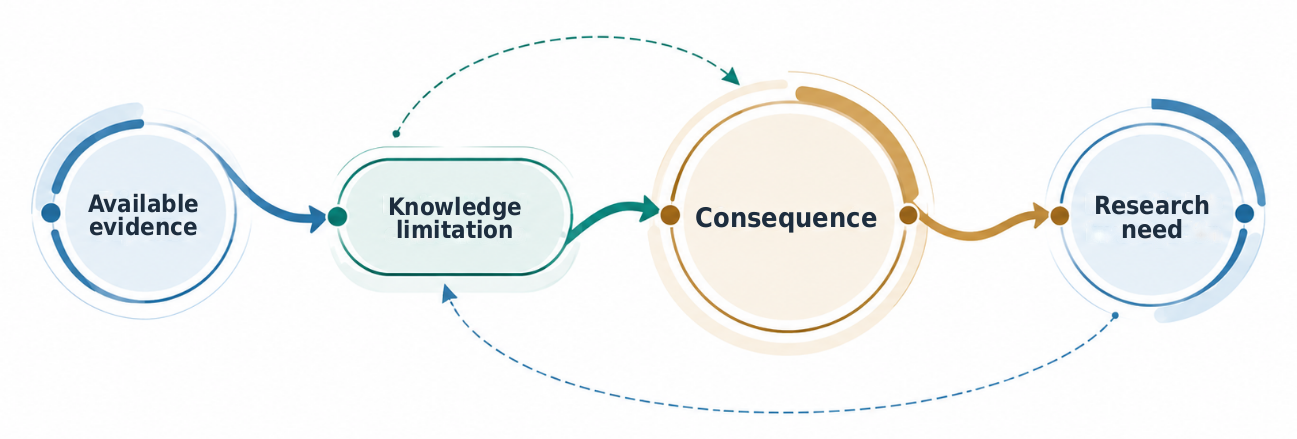
Figure 1 summarizes this reasoning: a limitation is identified within the available evidence, but its consequences determine whether a genuine research need exists. The return arrows indicate that this justification should be reassessed when new evidence or interpretations call the initially proposed gap into question.
Table 2 distinguishes common situations that may reveal a research gap, the questions needed to assess their relevance, and examples of insufficient justification.
An absence in the literature may identify a gap; its consequences determine whether a research need exists. For example, a weak justification would be: 'No studies of X have been conducted in population Y.' A stronger formulation would be: 'The evidence on X comes from different populations, and there are reasons to expect condition Z to modify the phenomenon; therefore, whether the findings generalize to Y remains uncertain.' In the second case, the new population is not merely a different context; it provides a relevant condition for testing the limits of existing knowledge.
Figure 1
Conceptual framework for identifying and justifying research needs.
Table 2
Research gaps and questions for assessing their scientific relevance.
Situation
Question to address
Weak justification
Insufficient evidence
What important question remains unanswered?
"Few studies exist"
Conflicting results
What could explain the discrepancy?
"The authors disagree"
Methodological limitation
Does the method restrict what can be established?
"No one has used this method"
Lack of validation
Which claim still needs to be tested?
"It has never been applied here"
Generalizability concern
Are there reasons to expect differences across contexts?
"This population has not been studied"
Theoretical limitation
What does the existing framework fail to explain adequately?
"We will use a different theory"
2.3. Significance, Novelty, and Contribution
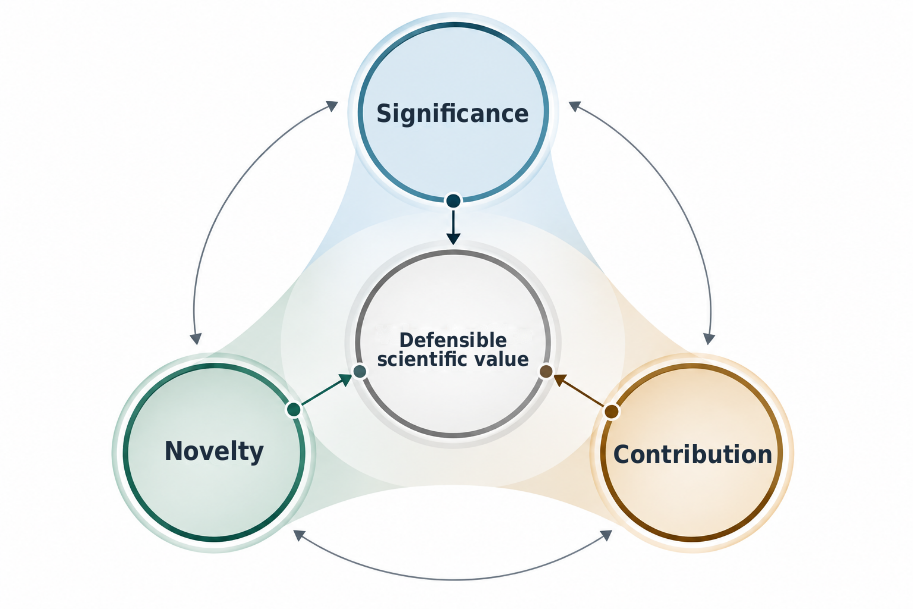
A research need should be examined through three complementary dimensions: significance, novelty, and contribution. Figure 2 illustrates how they work together to establish the study's defensible scientific value.
Significance addresses the question, 'Why does knowing the answer matter?' It should not be confused with statistical significance: a p-value does not determine the scientific importance of a question or finding (Wasserstein & Lazar, 2016).
Novelty addresses the question, 'What meaningful difference does this study introduce relative to what is already known?' Changing the population, country, tool, or technology may make a study different without necessarily making it important.
Contribution addresses the question, 'What will this study allow us to know, explain, or do better?' A finding is not automatically a contribution; a contribution emerges when the researcher specifies what the result adds to existing knowledge.
Science does not require every study to be entirely unprecedented. Replicating an important result, improving its precision, testing its generalizability, or resolving conflicting evidence can constitute meaningful contributions. What is new is not always important, and what is important does not always need to be entirely new.
Figure 2
Integration of scientific significance, novelty, and contribution.
2.4. Turning a Research Need into a Research Question
A research need must be translated into a clear, relevant question that can be answered with evidence. The question defines what the study seeks to establish and shapes its objective, design, data, and analysis. It should therefore emerge from an assessment of existing knowledge rather than being formulated first and justified afterward by searching for references (Farrugia et al., 2010; Barroga & Matanguihan, 2022).
There is no universal template. Research questions may seek to describe, compare, relate, explain, evaluate, or understand phenomena. Frameworks such as PICO and PICOT are useful for certain designs but should not be applied mechanically to every study.
A sound research question should meet four conditions: (i) clarity, by defining what the researcher seeks to know; (ii) relevance, because answering it would reduce an important uncertainty; (iii) feasibility, because the necessary evidence can be obtained; and (iv) methodological coherence, because the design can actually answer the question.
It is useful to distinguish the problem (the existing uncertainty), the question (what needs to be known), the objective (what the study will do to answer it), and, when appropriate, the hypothesis (the anticipated answer). Exploratory and qualitative studies do not always require hypotheses (Barroga & Matanguihan, 2022). A common mistake is to formulate a question that is more ambitious than the evidence the proposed design can provide.
For example, consider a field in which the available evidence on X comes mainly from populations different from Y, while previous research suggests that condition Z may modify the phenomenon. The research gap is therefore not simply that Y has not been studied. A corresponding research question could be: Does Z modify the relationship between X and the outcome in population Y? The objective would be to evaluate that relationship under the conditions present in Y. A defensible contribution would be to clarify whether previous evidence can be generalized to that population and under what conditions.
3. Identifying the Type of Article
The type of article should be selected before drafting progresses too far because it determines which evidence is presented, how it is organized, and which reporting guidelines apply. Although IMRaD works well for many original studies, other publication types may require different structures (International Committee of Medical Journal Editors [ICMJE], 2026).
For teaching purposes, it is helpful to begin with two broad groups: original research articles and review articles. This distinction simplifies the explanation but is not intended to capture the full diversity of scientific publications.
3.1. Original Research Articles
In an original research article, the main contribution comes from evidence obtained or analyzed specifically to answer the research question. Such evidence can take many forms, including experiments, observations, surveys, interviews, documents, databases, simulations, computational models, laboratory measurements, and fieldwork.
An original article is therefore not defined by any particular technique. It may report quantitative, qualitative, mixed-methods, experimental, observational, methodological, or computational research. What matters is that the manuscript communicates an investigation whose evidence is examined as a direct answer to a specific question.
The IMRaD structure distinguishes the functions readers need to recognize: establishing the problem, explaining how evidence was obtained, presenting the findings, and interpreting their meaning. Nevertheless, each design may require additional subsections, and the structure should follow the journal's instructions (ICMJE, 2026).
This does not mean that an original article must reproduce everything that happened during the investigation in chronological order. A manuscript is not a research log. Its purpose is to select the information readers need to understand how evidence was produced, evaluate its limitations, and determine what can be concluded. Preliminary activities, exploratory analyses, and intermediate decisions should be included only when relevant to understanding the study.
It is also important to distinguish publication type from research design. 'Original research article' describes a way of communicating a contribution, whereas 'cross-sectional study,' 'randomized trial,' 'qualitative study,' and 'mixed-methods study' describe how the research was designed and conducted. Thus, original articles can report very different designs, each with its own methodological and reporting requirements.
This distinction highlights three related but different decisions: (i) article type, which determines how the contribution is communicated; (ii) research design, which establishes how evidence was obtained or analyzed; and (iii) reporting guideline, which specifies what information must be provided to describe that design adequately.
Reporting guidelines promote completeness and transparency but do not replace methodological design and should not be used as quality-rating scales. CONSORT 2025, for example, identifies the minimum items for reporting randomized trials (Hopewell et al., 2025). Table 3 links several study designs to their corresponding guidelines, which should be applied within their intended scope.
These guidelines are particularly useful when consulted during study planning and revisited before submission. Using them does not demonstrate that a study is well designed; it helps authors communicate clearly how the study was conducted.
Table 3
Reporting guidelines by study design or publication type.
Study design or type
Common reporting guideline
Randomized trial
CONSORT 2025 (Hopewell et al., 2025)
Observational study
STROBE (von Elm et al., 2007)
Randomized trial protocol
SPIRIT 2025 (Chan et al., 2025)
Qualitative study with interviews or focus groups
COREQ, when applicable (Tong et al., 2007)
Clinical case report
CARE (Gagnier et al., 2013)
Diagnostic accuracy study
STARD (Bossuyt et al., 2015)
Clinical prediction model
TRIPOD+AI (Collins et al., 2024)
3.2. Review Articles
When the existing literature is the principal source of evidence, the contribution takes the form of a review. Its purpose should not be limited to collecting publications; rather, it should analyze, integrate, compare, or reinterpret existing knowledge to answer a question or produce a scientifically useful synthesis.
The term 'review' does not denote a single method. Grant and Booth (2009) described 14 review types that differ in their searching, appraisal, synthesis, and analysis procedures. Table 4 summarizes common types and the guidance available for reporting them. Because categories may overlap, the review question and purpose should determine the choice of review type and reporting guideline, not the other way around.
Systematic reviews and meta-analyses are not synonymous: the former involve a structured process of identifying, appraising, and synthesizing evidence, whereas the latter are statistical techniques that can be used when data are sufficiently compatible. When meta-analysis is inappropriate, SWiM provides guidance for reporting alternative approaches to synthesis (Campbell et al., 2020).
Not all review types have equivalent standards. ENTREQ addresses reporting of qualitative evidence syntheses; RAMESES covers realist syntheses; and PRIOR was developed specifically for overviews of reviews of health interventions and should not automatically be extended to every field (Gates et al., 2022).
Before beginning a review, three decisions should therefore be resolved: (i) what question needs to be answered, (ii) what kind of evidence can answer it, and (iii) what synthesis method fits that purpose. Only then should the corresponding reporting guidance be selected.
Table 5 compares the evidence sources, contributions, and methodological purposes of original research and review articles. This distinction serves a teaching purpose: both groups encompass several types of manuscripts with their own conventions.
Table 4
Review types, their purposes, and suggested reporting or methodological guidance.
Review type
Main purpose
When appropriate
Suggested reporting guideline or methodological reference
Systematic review
Answer a focused question using explicit, reproducible methods to identify, select, appraise, and synthesize evidence
When the question is sufficiently specific and a rigorous, traceable synthesis is needed
PRISMA 2020 for reporting (Page et al., 2021); PRISMA-P for protocols (Moher et al., 2015)
Systematic review with meta-analysis
Systematically synthesize evidence and statistically pool compatible estimates
When the studies are sufficiently comparable and statistical pooling is methodologically justified
PRISMA 2020 (Page et al., 2021) and the relevant extension, if applicable
Scoping review
Map the extent, characteristics, concepts, and types of available evidence
When the question is broad, the field is heterogeneous or emerging, or the aim is to characterize how a topic has been studied
PRISMA-ScR (Tricco et al., 2018)
Integrative review
Integrate empirical evidence and, where appropriate, theoretical or methodological sources to develop a broad understanding of a phenomenon
When different perspectives or research designs need to be combined
No universal PRISMA-equivalent guideline; Whittemore and Knafl's (2005) methodological framework may be used
Qualitative evidence synthesis
Integrate qualitative findings to develop interpretations, themes, or explanations
When the question concerns experiences, perceptions, processes, or meanings
ENTREQ (Tong et al., 2012), depending on the synthesis method
Realist synthesis
Explain how and why an intervention or phenomenon works, for whom, and under what conditions
When context and mechanisms are central to explaining complex outcomes
RAMESES for realist syntheses (Wong et al., 2013)
Overview of reviews
Integrate evidence from existing systematic reviews
When multiple reviews address the same question or related questions
PRIOR, for overviews of reviews of health interventions (Gates et al., 2022)
Narrative review
Conceptually integrate a topic, theory, or debate without necessarily following systematic review procedures
When the primary aim is interpretation, contextualization, or conceptual development
SANRA is an appraisal tool, not a PRISMA-equivalent reporting guideline (Baethge et al., 2019)
Table 5
Differences between original research and review articles.
Characteristic
Original research article
Review article
Primary evidence source
Data, materials, or observations examined specifically for the study
Previously available literature and evidence
Central question
What does the evidence obtained or analyzed in this study show?
What does the body of available evidence show?
Typical contribution
New finding, estimate, explanation, method, validation, or empirical evidence
Synthesis, integration, critical appraisal, explanation of discrepancies, trends, or research gaps
Methods
Explains how the research was designed, conducted, and analyzed
Explains how the literature was identified, selected, appraised, and synthesized, when applicable
Common structure
IMRaD or its variants
Depends on the type of review
Primary unit of analysis
Participants, observations, documents, samples, experiments, data, or other units
Scientific papers, studies, bodies of evidence, or previous reviews
Common mistake
Presenting new data without establishing what they add to knowledge
Summarizing individual papers without producing a synthesis
3.3. Other Types of Scientific Articles
Scientific communication also includes formats that do not fit neatly into conventional original research or review articles. Their names and requirements vary across disciplines and journals. They should therefore be selected according to the contribution being communicated and the publication types accepted by the target journal (ICMJE, 2026).
Some publications differ in the scientific product they emphasize; others differ in the stage of the research process at which they are published. Table 6 summarizes common formats and offers guidance for selecting among them.
These categories may overlap. A methodological article may include empirical validation and resemble an original research article; a case report may incorporate an extensive literature review; and a brief report may present original evidence with the same methodological rigor as a full-length article. An editorial category does not, by itself, determine research quality or design.
Some publication types have specific reporting recommendations: CARE addresses clinical case reports (Gagnier et al., 2013), and SPIRIT 2025 addresses randomized trial protocols (Chan et al., 2025). These guidelines must be chosen according to study design and field; there is no single standard for every type of publication.
The choice can be guided by three questions: (i) Where does the primary evidence come from? (ii) What is the main product or contribution I want to communicate? (iii) Which publication type does the journal recognize for that contribution?
Thus, if the main contribution comes from data analyzed specifically for the study, an original research article may be appropriate; if it critically integrates prior literature, some form of review may fit; if the main product is a method, a methodological article may be suitable; if the study is documented before results become available, a protocol may be appropriate; and if the main scientific product is a reusable dataset, a data paper may be preferable.
This is only an initial guide. Each journal determines which article types it accepts, how they are named, and what requirements apply. Consulting the author instructions early clarifies word limits, abstract structure, the number of tables and figures, data availability requirements, supplementary material, ethical requirements, and publication types that may be accepted by invitation only.
Table 6
Additional types of scientific publications and their contributions.
Publication type
Main contribution
Distinctive consideration
Methodological article
Proposes, develops, adapts, or evaluates a method, instrument, algorithm, or procedure
Should demonstrate how the method offers advantages or addresses an existing limitation
Study protocol
Prospectively describes how a study will be conducted
Documents decisions before results are known
Data paper
Describes a dataset and facilitates its understanding and reuse
The dataset and its documentation are central to the contribution
Brief report
Concisely presents original findings of limited scope
Brevity does not reduce requirements for rigor or transparency
Case study or case report
Examines a case or small series of particular interest in detail
Its value depends on the evidence or insight the case adds
Theoretical or conceptual article
Develops, integrates, challenges, or extends concepts, models, and explanations
The contribution rests primarily on argumentation and conceptual development
Perspective or commentary
Offers a reasoned interpretation of a scientific problem, development, or debate
Generally does not seek to provide primary empirical evidence
Editorial or scientific letter
Communicates brief positions, critiques, clarifications, or debates
Its role and level of editorial review vary considerably among journals
4. Manuscript Architecture
Before drafting extensively, authors should define the manuscript's architecture: the central message they wish to communicate, the evidence supporting it, and the relationships among its components. IMRaD organizes information but does not ensure that the problem, question, methods, results, and conclusions form a coherent argument (Mensh & Kording, 2017).
4.1. Defining the Central Message and Scientific Narrative
A paper should be provisionally summarized in a single central statement. Can I explain in one sentence what readers should remember after reading the article? If the only answer is 'we analyzed several variables and found various results,' the main contribution has probably not yet been identified.
Depending on the type of study, useful formulations include 'this study shows that ...,' 'provides evidence that ...,' 'this review proposes that ...,' or 'this paper describes ....' This statement is not necessarily the title or final conclusion; it is a way to test whether the manuscript has a recognizable central focus (Mensh & Kording, 2017; Drake & Han, 2025).
The scientific narrative should not simply reproduce everything that happened during the investigation in chronological order. A manuscript is not a laboratory notebook. Authors should select and organize the information readers need to understand the problem, the evidence, and the conclusions that can be drawn from it (Montagnes et al., 2022).
This does not justify retrospectively constructing an artificially flawless narrative. Negative, conflicting, or unexpected findings should not be removed merely because they complicate the story. Nor should an explanation developed after examining the results be presented as a prior hypothesis. Kerr (1998) termed this practice HARKing (hypothesizing after the results are known).
Exploratory analyses can yield valuable findings. The requirement is to distinguish transparently between what was planned and what emerged during analysis. The narrative should arise from the evidence; evidence should not be selectively chosen to support a predetermined narrative.
4.2. Checking Manuscript Coherence
Manuscript coherence requires alignment among the problem, question, objective, methods, results, discussion, and conclusion. In Figure 3, solid arrows indicate this sequence, while dashed arrows represent coherence checks linking the objective to the problem, the results to the objective, and the conclusions to the evidence. These arrows indicate reviews of the written argument, not permission to retrospectively change the design or hypotheses after the results are known.
Table 7 complements the diagram with questions that help authors identify inconsistencies during drafting and revision. When a study has several objectives, maintaining a comparable order in the Methods, Results, and Discussion makes the argument easier to follow (Montagnes et al., 2022).
Unexpected findings should also be integrated transparently. If they do not correspond to the original objectives, they may be reported as exploratory findings, provided they are clearly identified as such and the methods by which they were obtained are described.
Figure 3
Sequence and coherence checks in a scientific manuscript.
Table 7
Review questions and common inconsistencies in a manuscript.
Component
Review question
Common inconsistency
Problem / research gap
What meaningful limitation in existing knowledge is the study intended to address?
The stated problem is much broader than the study
Research question
What do we need to know?
The design cannot answer the question
Objective
What exactly will the study do?
Some objectives have no corresponding results
Methods
How will the necessary evidence be obtained?
Procedures do not address the objective
Results
What evidence answers the question?
Analyses appear without a methodological basis or relationship to the objective
Discussion
What do the findings mean?
Phenomena not demonstrated by the study are interpreted as findings
Conclusion
What can ultimately be claimed?
The inference exceeds what the design or data support
4.3. Building an Outline Before Drafting
Before writing complete paragraphs, it is useful to develop an outline connecting key messages, evidence, and interpretation (see Table 8). In empirical studies, preliminary tables and figures can help identify the truly central findings; in qualitative or conceptual studies, themes, categories, propositions, or arguments may serve the same purpose (Vitse & Poland, 2017; Montagnes et al., 2022).
An outline reveals problems before they become buried in pages of prose. If a major claim lacks identifiable evidence, a table addresses no research question, or a result does not advance the argument, the manuscript architecture still needs work. A common mistake is to draft a lengthy introduction before deciding which results and contribution will form the paper's core.
The order in which sections are written need not match the order in which they are read. Some authors begin with Results and figures; others start with Methods. Another strategy is to work backward from the main messages to the sections supporting them (Montagnes et al., 2022; Drake & Han, 2025). These are writing strategies, not rules. What must remain coherent is the logical progression experienced by readers.
Manuscript architecture also depends on its audience and editorial context. A specialized journal may assume background knowledge that a multidisciplinary journal must explain; a methods journal may require details that would be secondary in a journal focused on applications. Identifying a prospective journal early helps authors adjust length, depth, structure, and visuals without artificially changing the scientific contribution.
The architecture is sound when there is a clear relationship among what is asked, what is done, what is found, and what is ultimately claimed. Only then should authors focus their efforts on polishing the prose.
Table 8
Preliminary outline of messages, evidence, and interpretation.
Component
Preliminary definition
Central message
What is the main contribution in one sentence?
Supporting messages
Which findings are needed to support it?
Evidence
Which result, table, figure, category, or argument supports each message?
Interpretation
What does the evidence allow us to claim?
Limit
What does the evidence not allow us to claim?
Connection to the literature
What does it confirm, contradict, extend, or qualify?
5. Structure of a Scientific Manuscript
Once the contribution is defined, writing means translating the study's logic into prose that helps readers understand why the research was conducted, how the evidence was obtained, what was found, and what can be concluded. Each section serves a different purpose; confusing these functions creates redundancy and makes the argument harder to evaluate.
IMRaD organizes these functions in many original research articles; other publication types may use different structures. In practical terms, the title identifies the work, the abstract condenses its content, the Introduction justifies the question, the Methods document how evidence was obtained, the Results present it, the Discussion interprets it, and the Conclusions define what can be claimed (ICMJE, 2026).
One cross-cutting check is to ask whether each paragraph fulfills the purpose of its section. If not, it may need to be moved, rewritten, or deleted.
These functions need not be separated rigidly, but they provide a useful writing check: if a paragraph does not help answer the question assigned to its section, it may be misplaced or unnecessary.
5.1. Title
The title is the most condensed description of the work. It should allow readers to recognize the central topic quickly while helping search engines and bibliographic databases retrieve the paper. Authors should therefore use specific, recognizable terms from their field and avoid overly general formulations, unfamiliar acronyms, or methodological details that add little useful information (Pottier et al., 2024).
A strong title balances precision, information, and concision. It may include the population, phenomenon, main variables, or design when these elements help readers understand the study. Conversely, it should avoid claims that exceed the evidence, such as implying causation from an observational design or using phrases such as 'definitive study,' 'revolutionary finding,' or 'first study' without adequate justification. ICMJE recommendations also note that some reporting guidelines require the study design to be identified explicitly in the title when appropriate.
The final title is often best determined once the manuscript is well developed, because it can then reflect the contribution actually demonstrated rather than only the one initially anticipated.
5.2. Abstract and Keywords
The abstract should be understandable largely independently of the full manuscript. For many readers, it will be the only section consulted, and in many bibliographic databases it is the principal textual representation of the article. It must therefore accurately reflect the paper, remain consistent with the reported data, and avoid conclusions that exceed the evidence.
In original research articles, an informative abstract should include at least five components: (i) the minimum background needed to understand the problem; (ii) the main objective or research question; (iii) essential methodological details, such as the design, sample or data source, and primary analysis; (iv) the principal results, with specific numerical information where appropriate; and (v) a conclusion directly supported by those results.
Results should occupy a substantial portion of the abstract. Statements such as 'significant differences were found' convey little without information about their direction, magnitude, or estimated size. Where relevant, effect sizes, confidence intervals, or other measures of uncertainty should be reported rather than reducing interpretation to whether statistical significance was achieved.
The abstract should not introduce results absent from the manuscript, omit unfavorable primary findings, or make stronger claims than those supported in the Discussion. Concision does not justify leaving out information readers need to understand what was done and what was found.
5.3. Introduction
The Introduction should explain why the study was conducted rather than list every source consulted. It should select directly relevant evidence, establish the importance of the problem, and state an objective or hypothesis aligned with the identified research gap (ICMJE, 2026).
As shown in Fig. 4, the introduction progressively narrows the argument from the broader context to the specific purpose of the study: (i) contextualizing the problem and its importance; (ii) synthesizing the evidence needed to understand it; (iii) identifying what remains unresolved and why it matters; and (iv) stating the research question, objective, or hypothesis.
This progression is consistent with the organization described by Bahadoran et al. (2018) and with Mensh and Kording's (2017) emphasis on justifying the study. The four functions may be distributed across three or more paragraphs depending on the complexity of the problem; each piece of background information should help lead readers toward the research question.
The Introduction should end with an objective that clearly follows from the identified need. Adding general background after stating the objective often weakens the ending and obscures the study's purpose (Annesley, 2010).
Figure 4
Progressive narrowing of the introduction from the broader context to the specific research purpose.
5.4. Methods
The Methods section allows readers to assess how evidence was produced. Its quality depends not on length but on explaining the design, justifying consequential decisions, and providing enough information to reproduce procedures and analyses when appropriate.
The ICMJE (2026) recommends describing how and why the study was conducted in sufficient detail for someone with access to the data to reproduce its results. The organization depends on the design, but Table 9 covers key components of many empirical investigations.
Detail should focus on decisions that affect interpretation or reproducibility. Established methods may be cited; new or modified procedures require sufficient explanation and justification.
Statistical analyses deserve particular attention. The ICMJE recommends reporting results with appropriate measures of uncertainty, such as confidence intervals, and avoiding reliance solely on hypothesis tests and p-values, which do not convey magnitude and precision on their own. The SAMPL guidelines offer specific recommendations for reporting common statistical methods and results.
Statistical analyses should communicate the magnitude and uncertainty of estimates rather than depend exclusively on p-values. The SAMPL recommendations provide criteria for reporting statistical procedures and results (Lang & Altman, 2015). Planned analyses must also be distinguished from exploratory ones: unexpected findings may contribute knowledge, but they should not be reported as predictions formulated before examining the data.
Reporting guidelines should be used as aids: STROBE addresses observational studies, CONSORT 2025 addresses randomized trials, and PRISMA 2020 addresses systematic reviews, but none replaces sound design decisions (von Elm et al., 2007; Hopewell et al., 2025; Page et al., 2021).
Table 9
Information needed to describe study methods.
Component
Information that should be clear
Design
What type of study was conducted
Setting
Where and when the study was conducted
Participants, units, or data
Where they came from and how they were selected
Variables, measures, or categories
What was observed and how it was operationalized
Instruments / materials
Which tools were used and, where relevant, their properties
Procedure
What happened and under what conditions
Analysis
How the data were transformed into evidence
Ethics
Which approvals, consent procedures, or safeguards applied
5.5. Results
The Results section should answer what the evidence showed without anticipating explanations that belong in the Discussion. Findings related to the primary question should come first, whether or not they support the hypotheses (ICMJE, 2026).
Results should be organized by research question or objective, not by the order in which software generated the analyses. Each block should identify the issue or comparison addressed, state the main finding, and provide the supporting data, using tables or figures only when they make the evidence easier to examine (ICMJE, 2026).
In quantitative studies, 'statistically significant' should not replace a description of the result. When relevant, authors should report estimates, effect magnitudes, confidence intervals, and exact or sufficiently precise statistical values according to the conventions of their field.
In qualitative research, evidence takes other forms, including themes, categories, patterns, deviant cases, and illustrative quotations. Prespecified findings that contradict expectations should also be reported; concealing them to create a cleaner narrative undermines scientific transparency.
5.6. Discussion
The Discussion addresses what the results mean. It should not become a second Results section or a new literature review; its task is to place the findings in the context of existing knowledge (Hess, 2023).
An effective Discussion begins with the main finding and interprets it in light of the research question. It then compares concordant and discordant findings from the literature, considers possible explanations and implications, and identifies limitations and remaining uncertainties (ICMJE, 2026; Ghasemi et al., 2019).
Ghasemi et al. also emphasize that the Discussion should interpret findings, highlight their novel aspects, and place them within current knowledge. Mensh and Kording likewise summarize the section's role as explaining how the results address the stated gap, the limits of interpretation, and why the answer matters to the field.
Engaging with the literature does not mean citing only studies that agree with the findings. A scientifically useful Discussion should address both consistent and conflicting evidence and attempt to account for differences. These may reflect population, context, measurement, design, analysis, experimental conditions, or even random uncertainty.
Explanations must be distinguished from evidence. Phrases such as 'this might be explained by ...' are appropriate when proposing a plausible mechanism that was not directly demonstrated. Presenting a hypothetical explanation as an established fact constitutes overinterpretation.
Limitations matter to the extent that they affect interpretation, precision, validity, or generalizability. It is therefore better to explain their consequences—for example, that convenience sampling restricts generalization to the target population—than merely list shortcomings without discussing their effects.
5.7. Conclusions
The Conclusion should answer, 'What can we now claim based on this study?' It should not repeat the abstract verbatim or introduce new arguments. Its length depends on the type of manuscript: some journals incorporate it into the Discussion, while others require a separate section.
The strength of the conclusion must match the strength of the evidence. Observational or exploratory studies and studies with restricted samples require statements consistent with their inferential limits. Likewise, failing to find sufficient evidence of a difference does not automatically demonstrate equivalence or the absence of an effect.
A useful check is to compare three statements: (i) the objective, or what the study intended to establish; (ii) the result, or what was found; and (iii) the conclusion, or what can be claimed as a consequence. If the third introduces concepts absent from the first two, it should be reconsidered.
5.8. Tables, Figures, and Supplementary Material
Tables and figures should help readers understand evidence, not serve as decoration or unnecessarily repeat information already in the text. The choice depends on the intended message: highlighting a finding, presenting exact values, or making patterns and relationships easier to recognize (Tuncel & Atan, 2013).
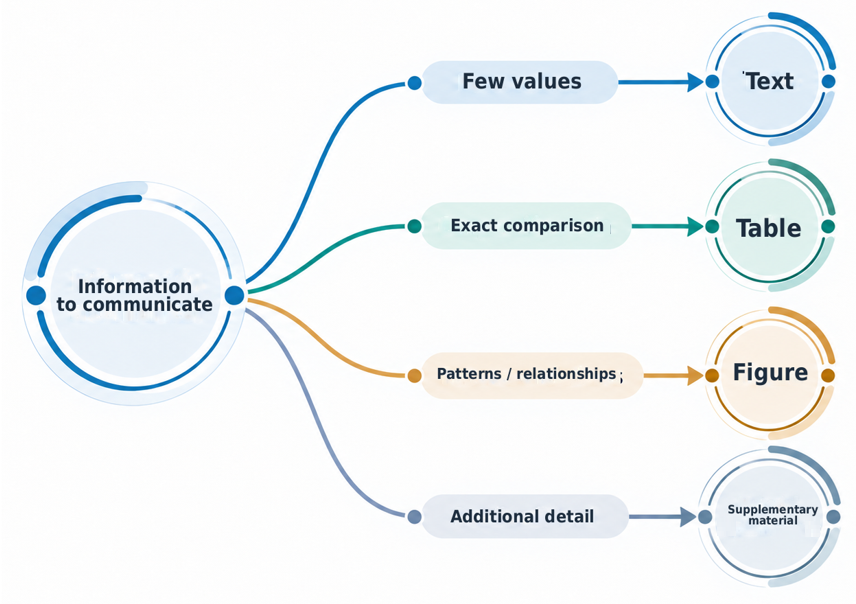
Fig. 5 provides a practical decision framework for selecting among text, tables, figures, and supplementary material according to the information that needs to be communicated.
Tables should include sufficiently informative titles, headings, units, and notes to be understood on their own; figures need clear labels and captions. The text should highlight key findings without reproducing every value already presented visually. Supplementary material should not conceal information essential to evaluating the study (ICMJE, 2026).
Figure 5
Choosing a presentation format based on its communicative purpose.
6. Artificial Intelligence as a Supporting Tool
Generative AI can assist with searching, organizing, writing, and reviewing, but fluent prose is not the same as sound reasoning. These tools may produce incorrect, incomplete, or biased responses; authors therefore remain responsible for the accuracy, integrity, and originality of all material incorporated into the manuscript (ICMJE, 2026).
Its usefulness increases when researchers understand the problem and have already structured their argument. Drake and Han (2025) recommend completing the intellectual work first and then using AI to review wording, identify inconsistencies, and flag unsupported claims.
6.1. Support Throughout the Research and Writing Process
The usefulness of AI depends on the task. As Table 10 shows, some activities are suitable for automated assistance, while others require disciplinary expertise and scientific judgment. The table distinguishes these forms of support from the decisions for which researchers remain responsible.
The table deliberately separates assistance from decision-making: AI may suggest terms, categories, or structures, but the researcher must select the evidence, assess interpretations, and validate every change incorporated into the text.
During the literature review, for example, AI may compare documents already retrieved by the researcher and flag patterns or discrepancies. Its suggestions must be checked against the original studies: a plausible reference may not exist or may not support the claim attributed to it.
When outlining and drafting, it can be useful to ask AI to detect inconsistencies between objectives and results, redundancies, or unsupported claims. Such feedback should be accepted only when the author confirms that it improves coherence without changing the scientific meaning (Drake & Han, 2025).
Table 10
Uses of AI and researcher responsibilities in scientific writing.
Stage
Potential AI assistance
Researcher responsibility
Topic exploration
Suggest related terms, synonyms, or potential search directions
Turn suggestions into verifiable search strategies
Literature review
Organize concepts, compare supplied texts, or summarize information
Read original sources and check every interpretation
State-of-the-art analysis
Help identify patterns, contradictions, or recurring questions
Determine whether these patterns are actually supported by the literature
Manuscript structure
Review consistency among the problem, question, objectives, and sections
Determine the manuscript's scientific logic
Writing
Rephrase sentences, reduce redundancy, and improve clarity or flow
Verify that scientific meaning has not changed
Tables and diagrams
Suggest ways to organize information
Validate categories, values, relationships, and sources
Critical review
Flag vague statements, contradictions, or potential omissions
Decide which suggestions are valid and revise the manuscript
Editorial preparation
Compare the manuscript with supplied instructions or checklists
Confirm the journal's requirements and reporting guideline directly
6.2. Always Verifying the Output
Fluent AI-generated text can conceal errors. Human review must check both the accuracy of claims and whether each cited source actually supports the information attributed to it (ICMJE, 2026).
A seemingly plausible reference may not exist, may contain incorrect bibliographic information, or may not support the cited claim. In the recommendations of the World Association of Medical Editors (WAME), Zielinski et al. (2023) emphasize authors' responsibility to check original sources. The same precautions apply to calculations, statistical interpretations, causal inferences, tables, and figures.
A simple rule is that any claim requiring evidence also requires human verification, even when suggested by AI.
The same caution applies to interpretations. A tool may propose several plausible reasons for a finding, but plausibility is not evidence. Generated explanations should initially be treated as interpretive hypotheses that researchers must assess against theory, prior studies, and the study design. This is especially important in the Discussion, where persuasive language can conceal a leap from what the results show to what the author wishes to infer.
Selecting the research question, deciding what constitutes sufficient evidence, establishing methodological criteria, interpreting findings, and defining the scope of the conclusions determine a study's intellectual content. These tasks may benefit from AI-assisted critique or comparison, but researchers must be able to explain and defend the final decisions.
6.3. Transparency About AI Use
Editorial policies on AI are changing and are not uniform; authors must therefore consult their target journal's policy before submission. The ICMJE (2026) requires AI use to be disclosed in both the cover letter and the manuscript, identifying the tool and its purpose. Writing assistance may be reported in the acknowledgments or in the section designated by the journal; if AI is used for data acquisition or analysis, analytical code generation, or figure creation, its use should be described in the Methods.
WAME recommendations likewise call for transparency and traceability when AI contributes to substantive content or procedures (Zielinski et al., 2023). Disclosures should allow editors and readers to distinguish technical assistance from authors' scientific decisions.
In its policy updated in June 2026, Elsevier (2026) distinguishes basic language correction from substantive AI-assisted changes and specifies disclosure requirements according to the type of use. Table 11 suggests typical disclosure locations; the journal's own policy determines the final requirements.
Note. The location and level of detail depend on the current editorial policy and how the tool was used.
As a practical measure, authors should maintain a brief internal record of AI-assisted activities during manuscript preparation. This record may include the tool and provider, date of use, task performed, type of material provided to the system, whether generated content was incorporated, the human verification performed, and where the use is disclosed in the manuscript. Such a record facilitates accurate disclosure and traceability if requested by editors or reviewers.
Transparency should not be regarded as a penalty for using these tools. Its purpose is to allow readers and reviewers to understand which parts of the process were assisted and who assumed responsibility for the scientific decisions and final content.
Table 11
Suggested locations for disclosing the use of artificial intelligence.
Type of AI use
Typical disclosure location, depending on journal policy
Basic language correction
May not require disclosure under some editorial policies
Substantive rewriting or writing assistance
Acknowledgments or designated AI disclosure section
Data generation or processing
Methods
AI-assisted analysis
Methods, with sufficient detail for evaluation
Code generation for analysis
Methods or supplementary material, depending on relevance
Figure generation or modification
Methods and AI disclosure, according to journal policy
AI as the subject of the study
Methods
6.4. Confidentiality and Information Protection
External tools also introduce a concern that does not arise when editing a document locally: the information submitted may be processed, stored, or reused under the service's terms. Particular care is required when working with personal or sensitive data; confidential institutional information; unpublished findings; third-party manuscripts; documents under peer review; and unpublished intellectual property.
The ICMJE (2026) reminds editors and reviewers that manuscripts submitted for peer review are privileged communications: they must not upload them to AI systems that cannot guarantee confidentiality without the authors' explicit permission.
Although that recommendation primarily addresses editorial processes, the principle is relevant to every researcher: before entering nonpublic information into an AI system, users should understand its privacy, storage, and data-use terms.
Elsevier (2026) likewise cautions that even a tool described as private may involve sharing a manuscript with third parties. Privacy, storage, and data-use terms should be examined before submitting nonpublic information.
6.5. A Practical Way to Use AI Without Losing Scientific Control
A practical strategy for using AI during writing is to propose, critically assess, and verify. The tool may suggest wording, structures, or interpretations; the researcher must assess their consistency with the question, methods, results, and sources and verify their accuracy before incorporating them into the paper.
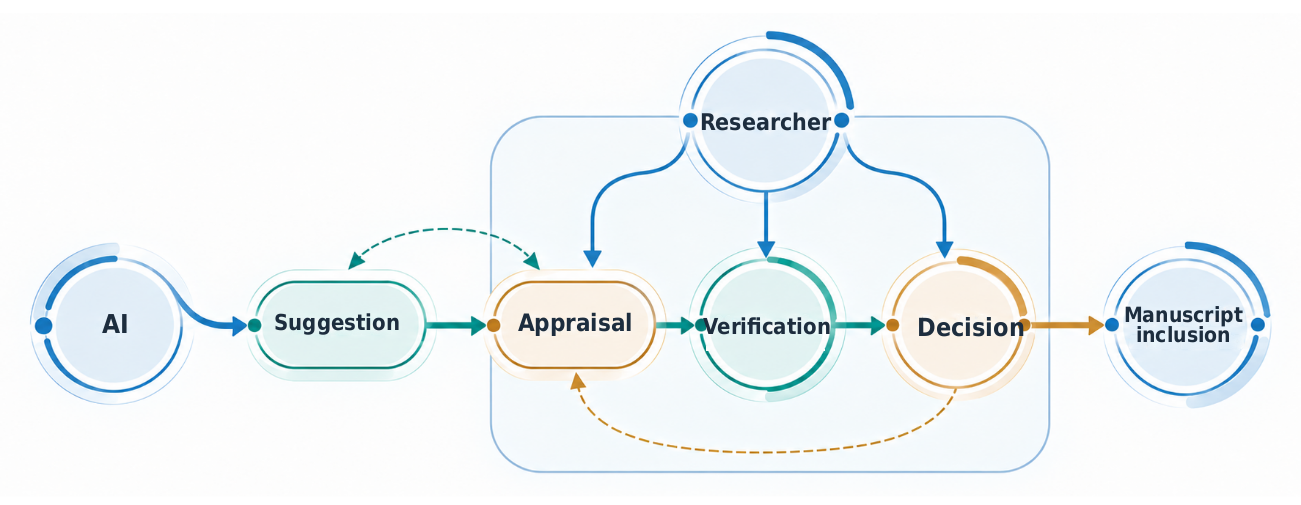
Fig. 6 summarizes this iterative workflow, emphasizing human verification and decision-making before AI-assisted content is incorporated into the manuscript.
For example, rather than asking AI to write the entire Discussion, an author can provide a preliminary interpretation and ask the tool to identify unsupported claims, potentially unwarranted causal inferences, or inconsistencies with the results. Similarly, AI can flag misalignment between the research need and objective or between methods and results. Authors must evaluate all such feedback.
AI is useful for supporting critical review, not for replacing scientific reasoning. The guiding principle is assistance without substitution, verification before incorporation, and disclosure in accordance with editorial policy.
Figure 6
AI-assisted proposal and human review, verification, and decision-making workflow.
7. Conclusions
Preparing a scientific paper begins before drafting. This guide emphasizes the importance of critically synthesizing existing knowledge, justifying a research need, and establishing a defensible contribution. A lack of publications or the introduction of a new context does not, on its own, justify a study; authors must explain which meaningful uncertainty they intend to address.
Coherence among the problem, question, objective, methods, results, and conclusions is the foundation of the manuscript. These components must align, and final claims must remain within the limits of the evidence. Reporting guidelines, tables, figures, and artificial intelligence tools can assist communication and review, but they cannot replace methodological rigor or authors' scientific judgment.
This approach also has limitations. Because the guide is narrative and non-exhaustive, it is not a comprehensive synthesis of all available recommendations, and the usefulness of the proposed pathway is based on the author's experience rather than empirical validation. Writing conventions also differ across disciplines and journals, while AI policies continue to evolve. The recommendations should therefore be understood as a flexible framework that complements the methodological and editorial standards applicable to each study.
Good scientific writing is not about making a study appear better than it is. It is about communicating its rationale, findings, limitations, and contribution to knowledge accurately. The next step is to put these principles into practice: organize the evidence, develop the argument, and begin writing, with the willingness to critically revise each version until the manuscript is clear, rigorous, and transparent.
Conflicts of Interest.
The author declares no conflicts of interest.
Acknowledgments
Not applicable.
Ethics Statement
Ethics approval was not required for this narrative guide because it did not involve human participants, animals, or sensitive personal data.
Author Contributions
J.B.: Conceptualization; Methodology; Investigation and critical analysis of the literature; Validation of sources and content; Visualization; Writing—Original Draft; Writing—Review & Editing. The author has read and approved the final manuscript and accepts full responsibility for its content.
Funding
Not applicable.
Generative AI Statement
ChatGPT (OpenAI) was used to assist with language editing, translation into American English, manuscript organization, and adaptation to the journal's format. Generative tools were also used to develop visual diagrams. The author remains responsible for accuracy, scientific interpretation, source verification, and approval of the final text.
Data Availability Statement
No new data were generated or analyzed for this narrative guide. The information discussed is available from the references cited.
Baethge C. Goldbeck-Wood S. Mertens S (2019). SANRA—A scale for the quality assessment of narrative review articles. Research Integrity and Peer Review, 4, 5. https://doi.org/10.1186/s41073-019-0064-8
Bahadoran Z. Jeddi S. Mirmiran P. Ghasemi A (2018). The principles of biomedical scientific writing: Introduction. International Journal of Endocrinology and Metabolism, 16(4), e84795. https://doi.org/10.5812/ijem.84795
Barroga E. Matanguihan G. J (2022). A practical guide to writing quantitative and qualitative research questions and hypotheses in scholarly articles. Journal of Korean Medical Science, 37(16), e121. https://doi.org/10.3346/jkms.2022.37.e121
Bossuyt P. M. Reitsma J. B. Bruns D. E. Gatsonis C. A. Glasziou P. P. Irwig L. Lijmer J. G. Moher D. Rennie D. de Vet H. C. W. Kressel H. Y. Rifai N. Golub R. M. Altman D. G. Hooft L. Korevaar D. A. Cohen J. F (2015). STARD 2015: An updated list of essential items for reporting diagnostic accuracy studies. BMJ, 351, h5527. https://doi.org/10.1136/bmj.h5527
Busse C. August E (2021). How to write and publish a research paper for a peer-reviewed journal. Journal of Cancer Education, 36, 909–913. https://doi.org/10.1007/s13187-020-01751-z
Campbell M. McKenzie J. E. Sowden A. Katikireddi S. V. Brennan S. E. Ellis S. Hartmann-Boyce J. Ryan R. Shepperd S. Thomas J. Welch V. Thomson H (2020). Synthesis without meta-analysis (SWiM) in systematic reviews: Reporting guideline. BMJ, 368, l6890. https://doi.org/10.1136/bmj.l6890
Chan A.-W. Boutron I. Hopewell S. Moher D. Schulz K. F. Collins G. S. Tunn R. Aggarwal R. Berkwits M. Berlin J. A. Bhandari N. Butcher N. J. Campbell M. K. Chidebe R. C. W. Elbourne D. R. Farmer A. J. Fergusson D. A. Golub R. M. Goodman S. N. ... Hróbjartsson A (2025). SPIRIT 2025 statement: Updated guideline for protocols of randomised trials. BMJ, 389, e081477. https://doi.org/10.1136/bmj-2024-081477
Collins G. S. Moons K. G. M. Dhiman P. Riley R. D. Beam A. L. Van Calster B. Ghassemi M. Liu X. Reitsma J. B. van Smeden M. Boulesteix A.-L. Camaradou J. C. Celi L. A. Denaxas S. Denniston A. K. Glocker B. Golub R. M. Harvey H. Heinze G. ... Logullo P (2024). TRIPOD+AI statement: Updated guidance for reporting clinical prediction models that use regression or machine learning methods. BMJ, 385, e078378. https://doi.org/10.1136/bmj-2023-078378
Farrugia P. Petrisor B. A. Farrokhyar F. Bhandari M (2010). Research questions, hypotheses and objectives. Canadian Journal of Surgery, 53(4), 278–281.
Gagnier J. J. Kienle G. Altman D. G. Moher D. Sox H. Riley D (2013). The CARE guidelines: Consensus-based clinical case reporting guideline development. BMJ Case Reports, 2013, bcr2013201554. https://doi.org/10.1136/bcr-2013-201554
Gates M. Gates A. Pieper D. Fernandes R. M. Tricco A. C. Moher D. Brennan S. E. Li T. Pollock M. Lunny C. Sepúlveda D. McKenzie J. E. Scott S. D. Robinson K. A. Matthias K. Bougioukas K. I. Fusar-Poli P. Whiting P. Moss S. J. Hartling L (2022). Reporting guideline for overviews of reviews of healthcare interventions: Development of the PRIOR statement. BMJ, 378, e070849. https://doi.org/10.1136/bmj-2022-070849
Ghasemi A. Bahadoran Z. Mirmiran P. Hosseinpanah F. Shiva N. Zadeh-Vakili A (2019). The principles of biomedical scientific writing: Discussion. International Journal of Endocrinology and Metabolism, 17(3), e95415. https://doi.org/10.5812/ijem.95415
Grant M. J. Booth A (2009). A typology of reviews: An analysis of 14 review types and associated methodologies. Health Information & Libraries Journal, 26(2), 91–108. https://doi.org/10.1111/j.1471-1842.2009.00848.x
Hopewell S. Chan A.-W. Collins G. S. Hróbjartsson A. Moher D. Schulz K. F. Tunn R. Aggarwal R. Berkwits M. Berlin J. A. Bhandari N. Butcher N. J. Campbell M. K. Chidebe R. C. W. Elbourne D. Farmer A. Fergusson D. A. Golub R. M. Goodman S. N. ... Boutron I (2025). CONSORT 2025 statement: Updated guideline for reporting randomised trials. BMJ, 389, e081123. https://doi.org/10.1136/bmj-2024-081123
International Committee of Medical Journal Editors. (2026). Recommendations for the conduct, reporting, editing, and publication of scholarly work in medical journals (updated January 2026). https://www.icmje.org/recommendations/
Lang T. A. Altman D. G (2015). Basic statistical reporting for articles published in biomedical journals: The “Statistical Analyses and Methods in the Published Literature” or the SAMPL guidelines. International Journal of Nursing Studies, 52(1), 5–9. https://doi.org/10.1016/j.ijnurstu.2014.09.006
Moher, D., Shamseer, L., Clarke, M., Ghersi, D., Liberati, A., Petticrew, M., Shekelle, P., Stewart, L. A., & PRISMA-P Group. (2015). Preferred reporting items for systematic review and meta-analysis protocols (PRISMA-P) 2015 statement. Systematic Reviews, 4, 1. https://doi.org/10.1186/2046-4053-4-1
Montagnes D. J. S. Montagnes E. I. Yang Z (2022). Finding your scientific story by writing backwards. Marine Life Science & Technology, 4, 1–9. https://doi.org/10.1007/s42995-021-00120-z
Page M. J. McKenzie J. E. Bossuyt P. M. Boutron I. Hoffmann T. C. Mulrow C. D. Shamseer L. Tetzlaff J. M. Akl E. A. Brennan S. E. Chou R. Glanville J. Grimshaw J. M. Hróbjartsson A. Lalu M. M. Li T. Loder E. W. Mayo-Wilson E. McDonald S. ... Moher D (2021). The PRISMA 2020 statement: An updated guideline for reporting systematic reviews. BMJ, 372, n71. https://doi.org/10.1136/bmj.n71
Pottier P. Lagisz M. Burke S. Drobniak S. M. Downing P. A. Macartney E. L. Martinig A. R. Mizuno A. Morrison K. Pollo P. Ricolfi L. Tam J. Williams C. Yang Y. Nakagawa S (2024). Title, abstract and keywords: A practical guide to maximize the visibility and impact of academic papers. Proceedings of the Royal Society B: Biological Sciences, 291(2027), 20241222. https://doi.org/10.1098/rspb.2024.1222
Robinson K. A. Saldanha I. J. McKoy N. A (2011). Development of a framework to identify research gaps from systematic reviews. Journal of Clinical Epidemiology, 64(12), 1325–1330. https://doi.org/10.1016/j.jclinepi.2011.06.009
Sauer P. C. Seuring S (2023). How to conduct systematic literature reviews in management research: A guide in 6 steps and 14 decisions. Review of Managerial Science, 17, 1899–1933. https://doi.org/10.1007/s11846-023-00668-3
Sollaci L. B. Pereira M. G (2004). The introduction, methods, results, and discussion (IMRAD) structure: A fifty-year survey. Journal of the Medical Library Association, 92(3), 364–367.
Tong A. Flemming K. McInnes E. Oliver S. Craig J (2012). Enhancing transparency in reporting the synthesis of qualitative research: ENTREQ. BMC Medical Research Methodology, 12, 181. https://doi.org/10.1186/1471-2288-12-181
Tong A. Sainsbury P. Craig J (2007). Consolidated criteria for reporting qualitative research (COREQ): A 32-item checklist for interviews and focus groups. International Journal for Quality in Health Care, 19(6), 349–357. https://doi.org/10.1093/intqhc/mzm042
Tricco A. C. Lillie E. Zarin W. O’Brien K. K. Colquhoun H. Levac D. Moher D. Peters M. D. J. Horsley T. Weeks L. Hempel S. Akl E. A. Chang C. McGowan J. Stewart L. Hartling L. Aldcroft A. Wilson M. G. Garritty C. M. ... Straus S. E (2018). PRISMA extension for scoping reviews (PRISMA-ScR): Checklist and explanation. Annals of Internal Medicine, 169(7), 467–473. https://doi.org/10.7326/m18-0850
Tuncel A. Atan A (2013). How to clearly articulate results and construct tables and figures in a scientific paper? Turkish Journal of Urology, 39(Suppl. 1), 16–19. https://doi.org/10.5152/tud.2013.048
Turbek S. P. Chock T. M. Donahue K. Havrilla C. A. Oliverio A. M. Polutchko S. K. Shoemaker L. G. Vimercati L (2016). Scientific writing made easy: A step-by-step guide to undergraduate writing in the biological sciences. The Bulletin of the Ecological Society of America, 97(4), 417–426. https://doi.org/10.1002/bes2.1258
von Elm E. Altman D. G. Egger M. Pocock S. J. Gøtzsche P. C. Vandenbroucke J. P (2007). The Strengthening the Reporting of Observational Studies in Epidemiology (STROBE) statement: Guidelines for reporting observational studies. PLOS Medicine, 4(10), e296. https://doi.org/10.1371/journal.pmed.0040296
Wasserstein R. L. Lazar N. A (2016). The ASA statement on p-values: Context, process, and purpose. The American Statistician, 70(2), 129–133. https://doi.org/10.1080/00031305.2016.1154108
Webster J. Watson R. T (2002). Analyzing the past to prepare for the future: Writing a literature review. MIS Quarterly, 26(2), xiii–xxiii.
Wong G. Greenhalgh T. Westhorp G. Buckingham J. Pawson R (2013). RAMESES publication standards: Realist syntheses. BMC Medicine, 11, 21. https://doi.org/10.1186/1741-7015-11-21
Zielinski C. Winker M. A. Aggarwal R. Ferris L. E. Heinemann M. Lapeña J. F. Pai S. A. Ing E. Citrome L. Alam M. Voight M. Habibzadeh F (2023). Chatbots, generative AI, and scholarly manuscripts: WAME recommendations on chatbots and generative artificial intelligence in relation to scholarly publications. World Association of Medical Editors. https://www.wame.org/page3.php?id=106